the broommaker - SHED Projects
The Broommaker was a three-week residency featuring artist and educator Hunter Elliott, centered on traditional broommaking and land-based material research. The project followed a months-long process of planting, cultivating, harvesting, and drying sorghum (broomcorn) grown on-site at SHED Projects.
During the residency, Elliott transformed the broomcorn into functional and sculptural works through a public-facing studio practice. The program emphasized process, material literacy, and the relationship between land, labor, and domestic tools, and included open studio hours, workshops, and community gatherings.
This project was supported in part by Berea College as well as through a grant from the Ohio Arts Council, which receives support from the State of Ohio and the National Endowment for the Arts.
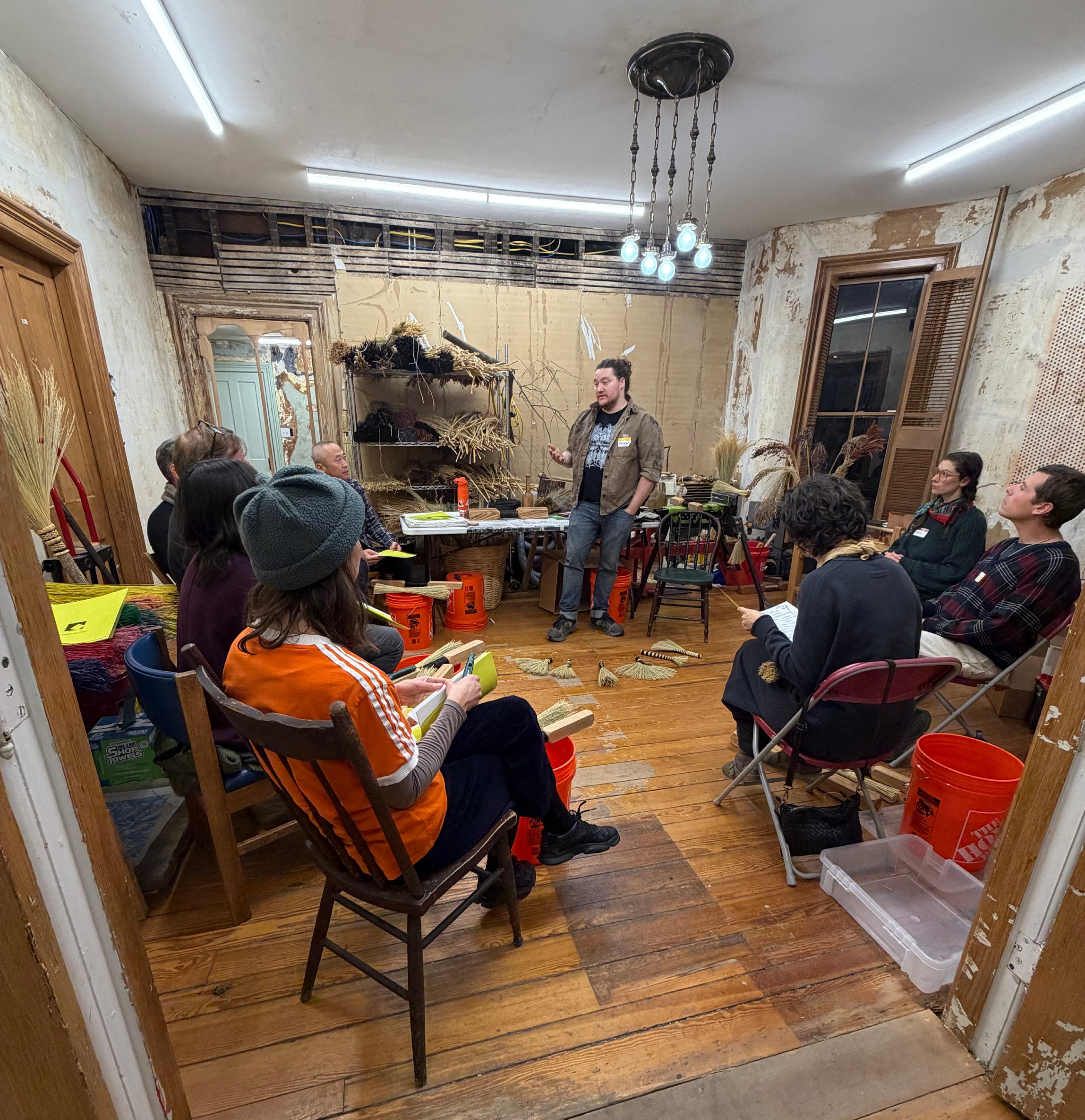
in-progress photo of one of the 6 broom classes taught during The broommaker
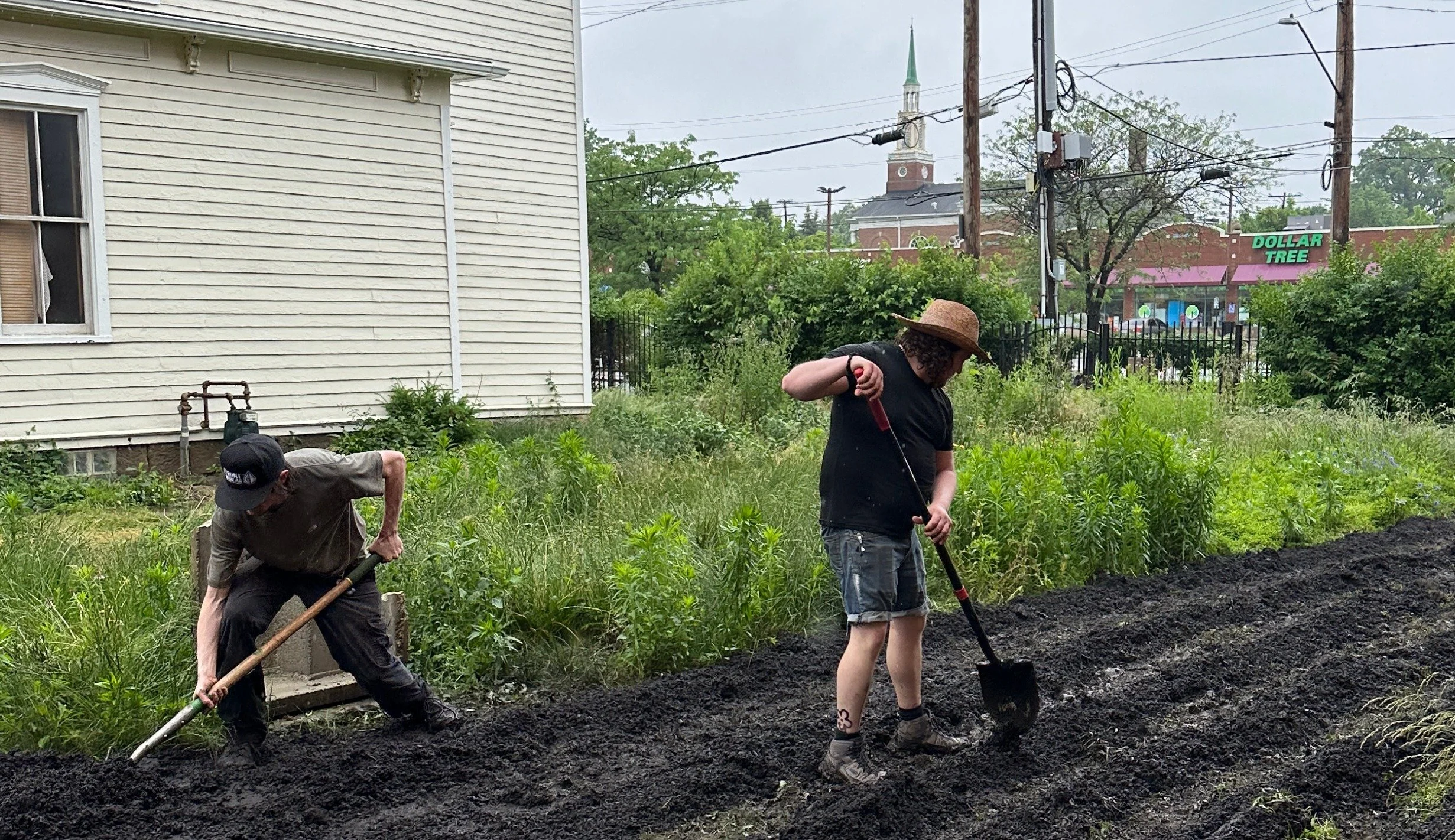
the first stage of the residency required tilling a plot in the back of SHED’s yard and adding nutrient-rich local compost prepare for the growing of broomcorn (sorghum bicolor) which would later be used in workshops and in special “home-grown” brooms
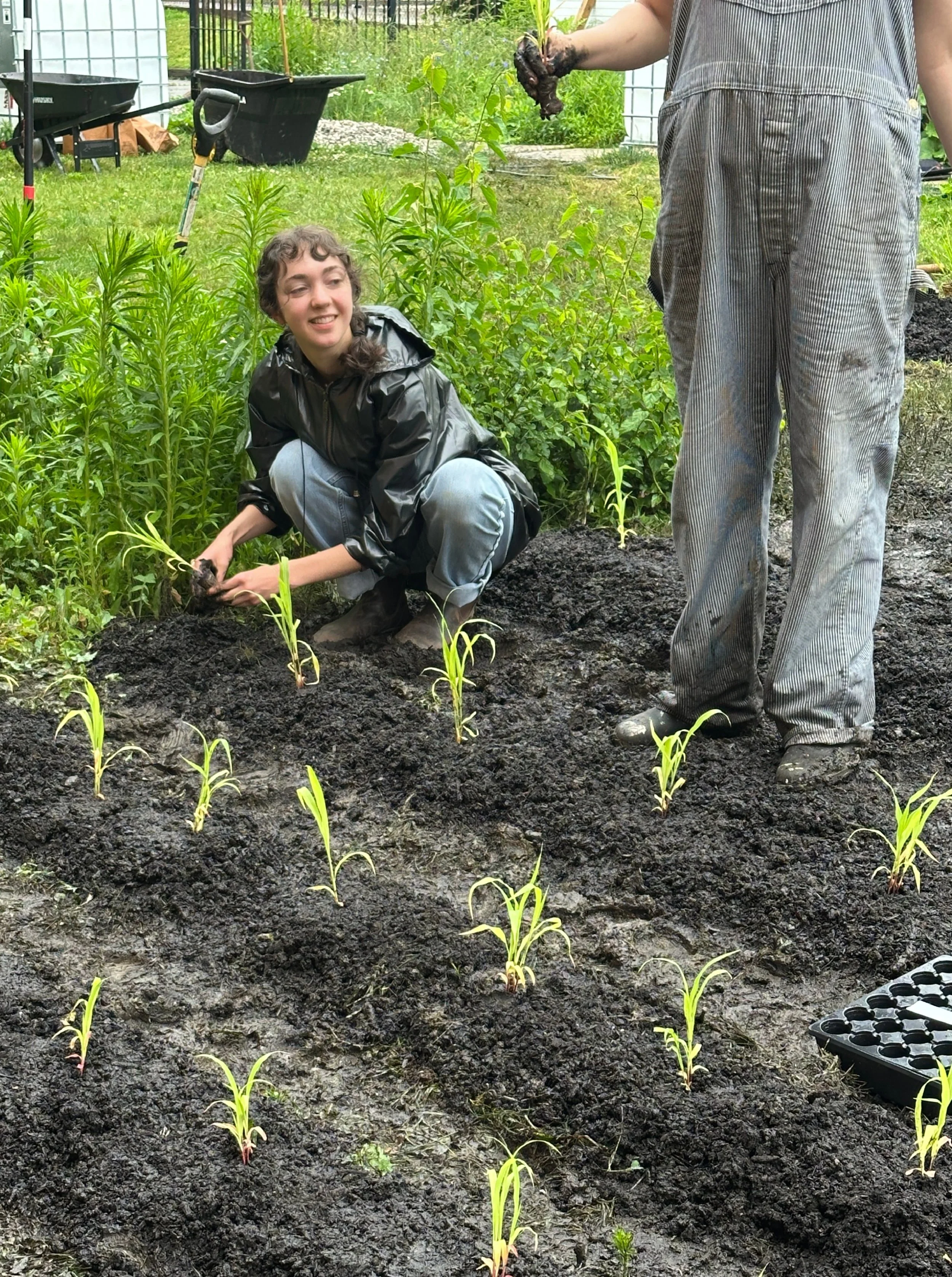
in the spring, Community members generously volunteered to help plant sorghum seedlings in the rain
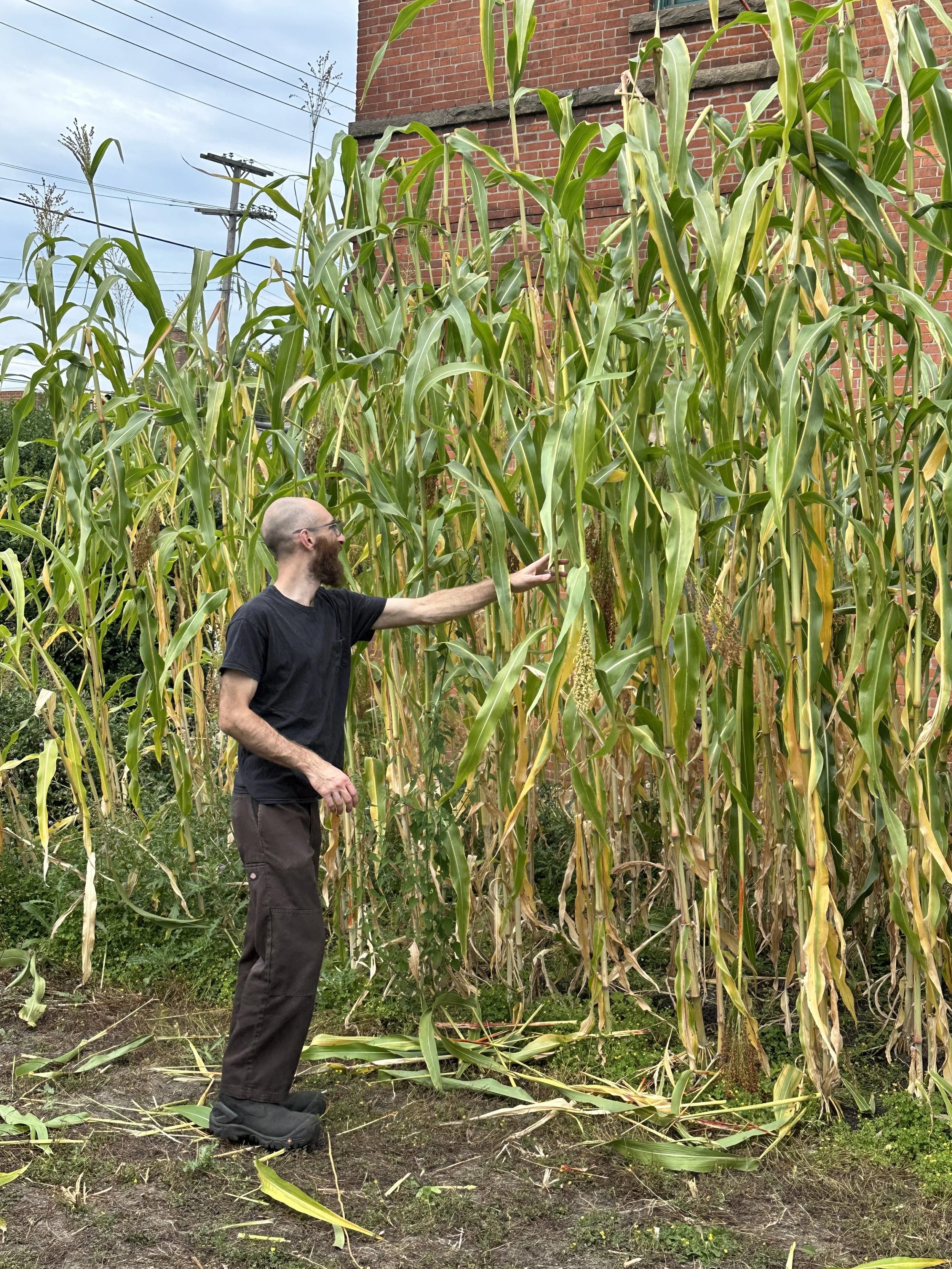
After several months, the broomcorn grew to full height and so the community banded together again to help harvest the crop
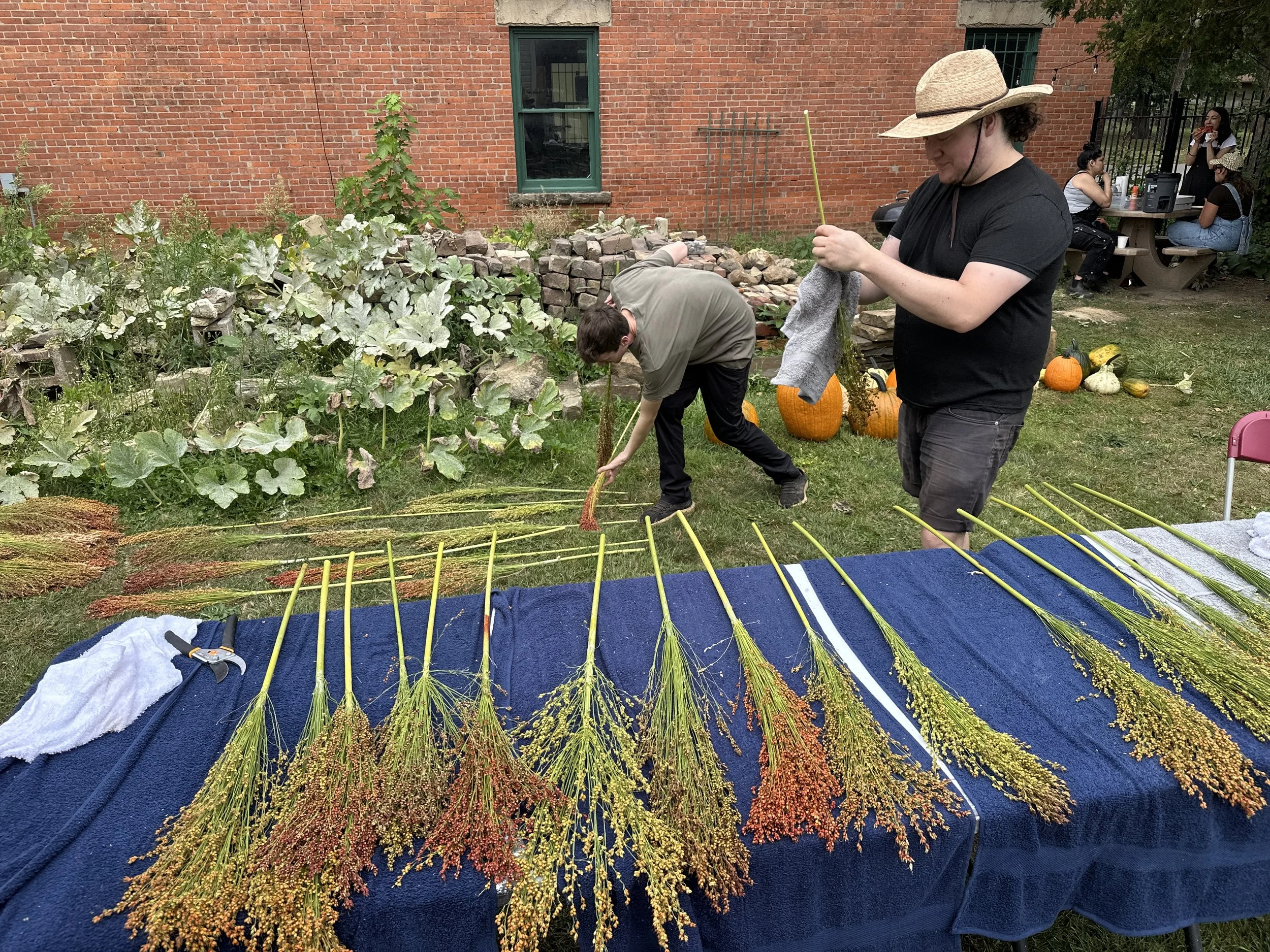
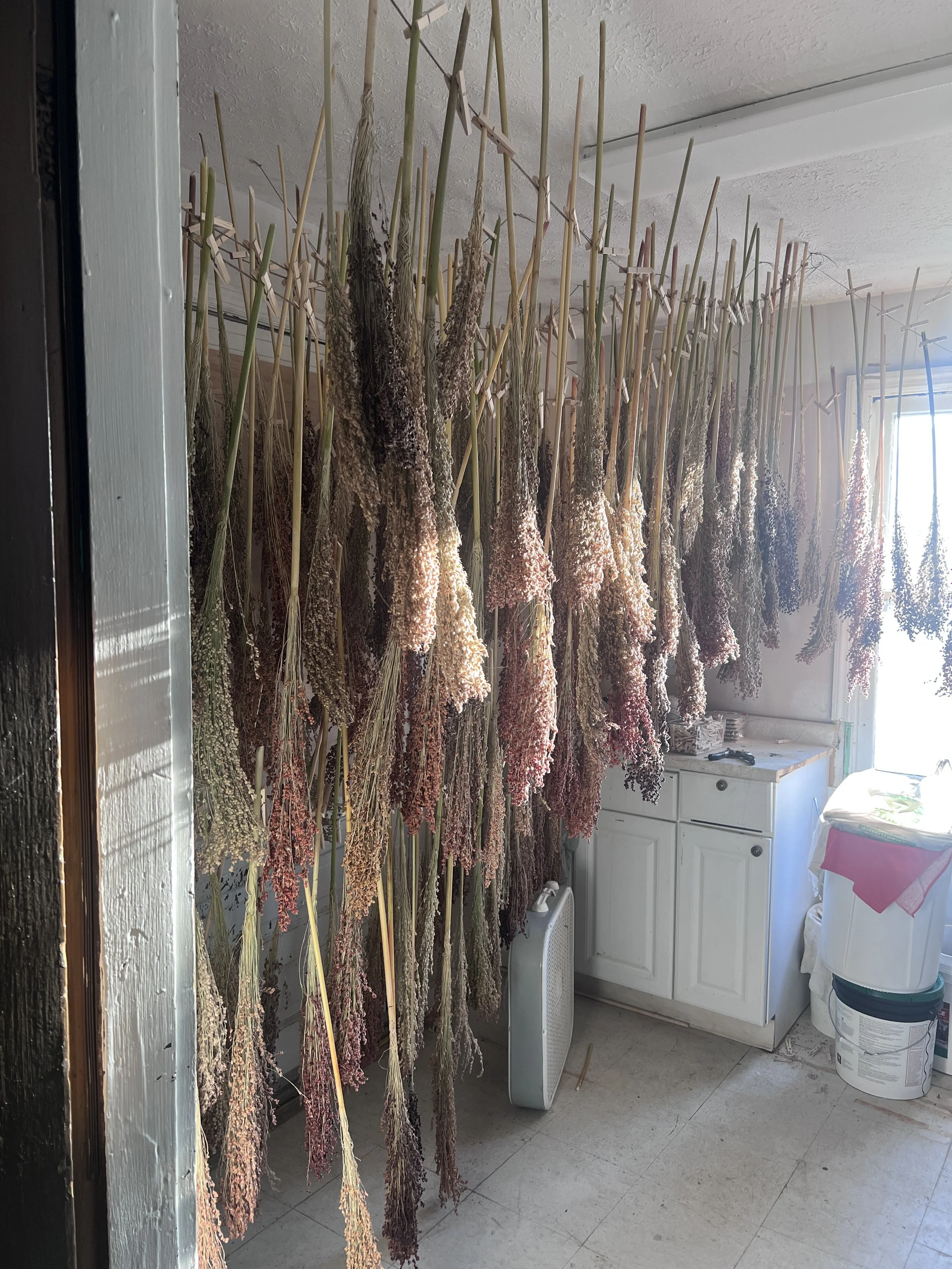
Broomcorn is washed and laid out in the sun to dry for a couple days, then it is hung inside to finish the drying process
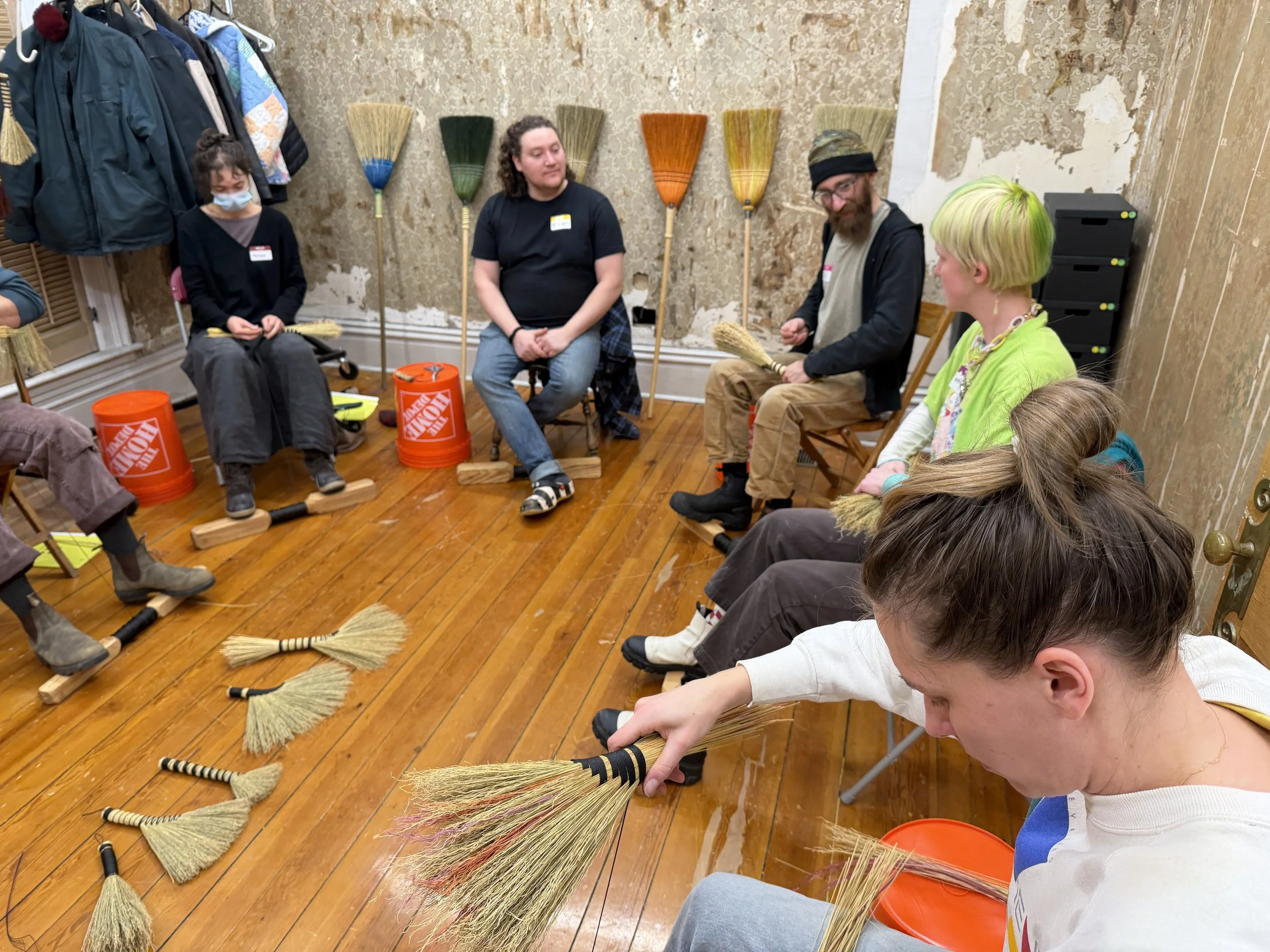
once the residency properly began, education was one of two primary focuses. over the course of 3 weeks, there were 6 classes, weekly studio hours, and a number of private demos. Interested parties came from the community as well as from out of state to visit shed and to participate in this unique experience. by the end of the residency, over 60 people had made their first broom and several hundred people had come through the doors of SHED Projects.
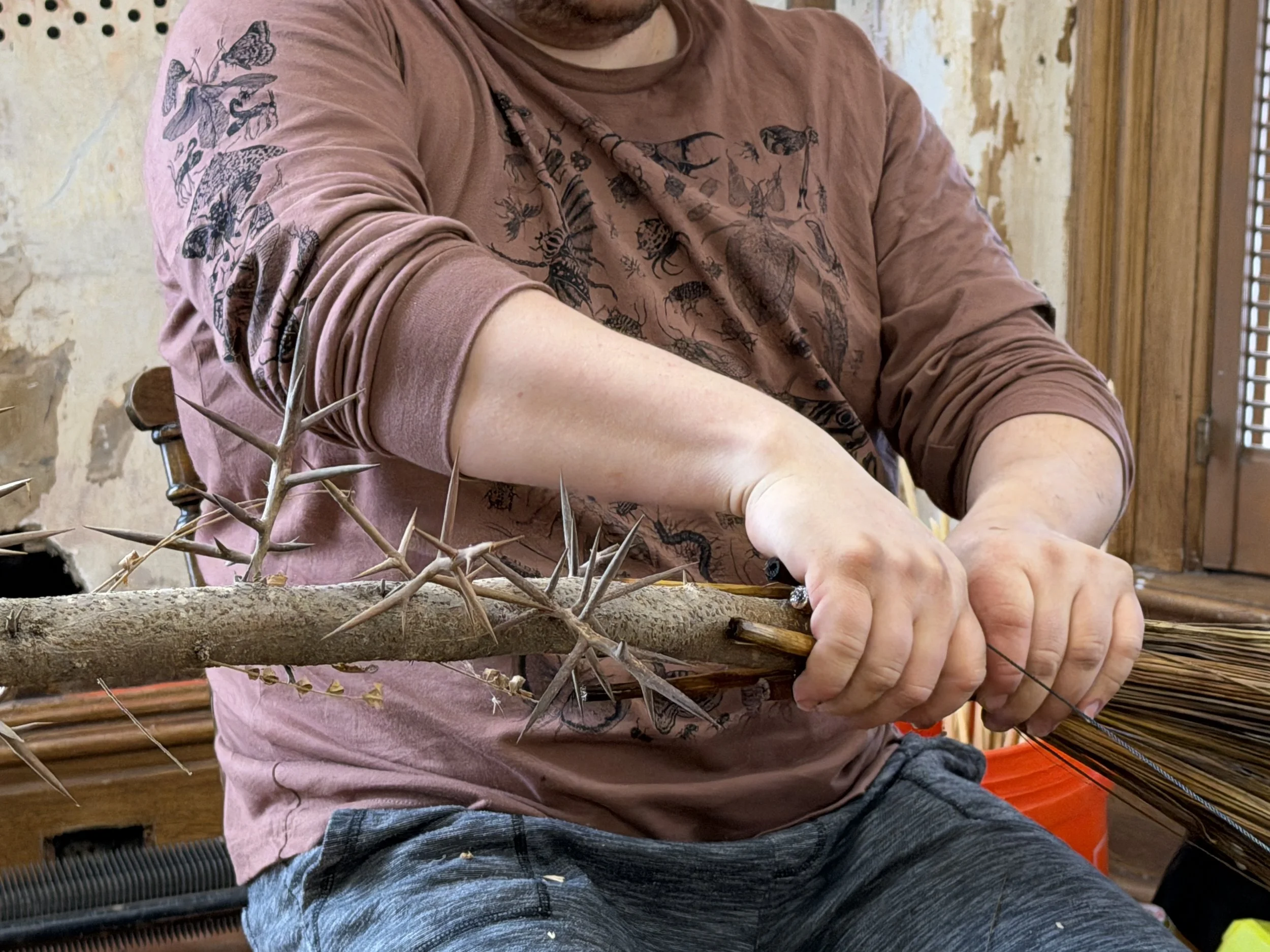
The other primary component of the broommaker was of course to pursue my own creative endeavors and forge new paths within my practice by taking the necessary time to experiment. To learn something new is to become a better educator. Without taking the risk to make something new, it becomes easy to stagnate, and no one wants a stagnating teacher. Below is a selection of work I finished during the residency.
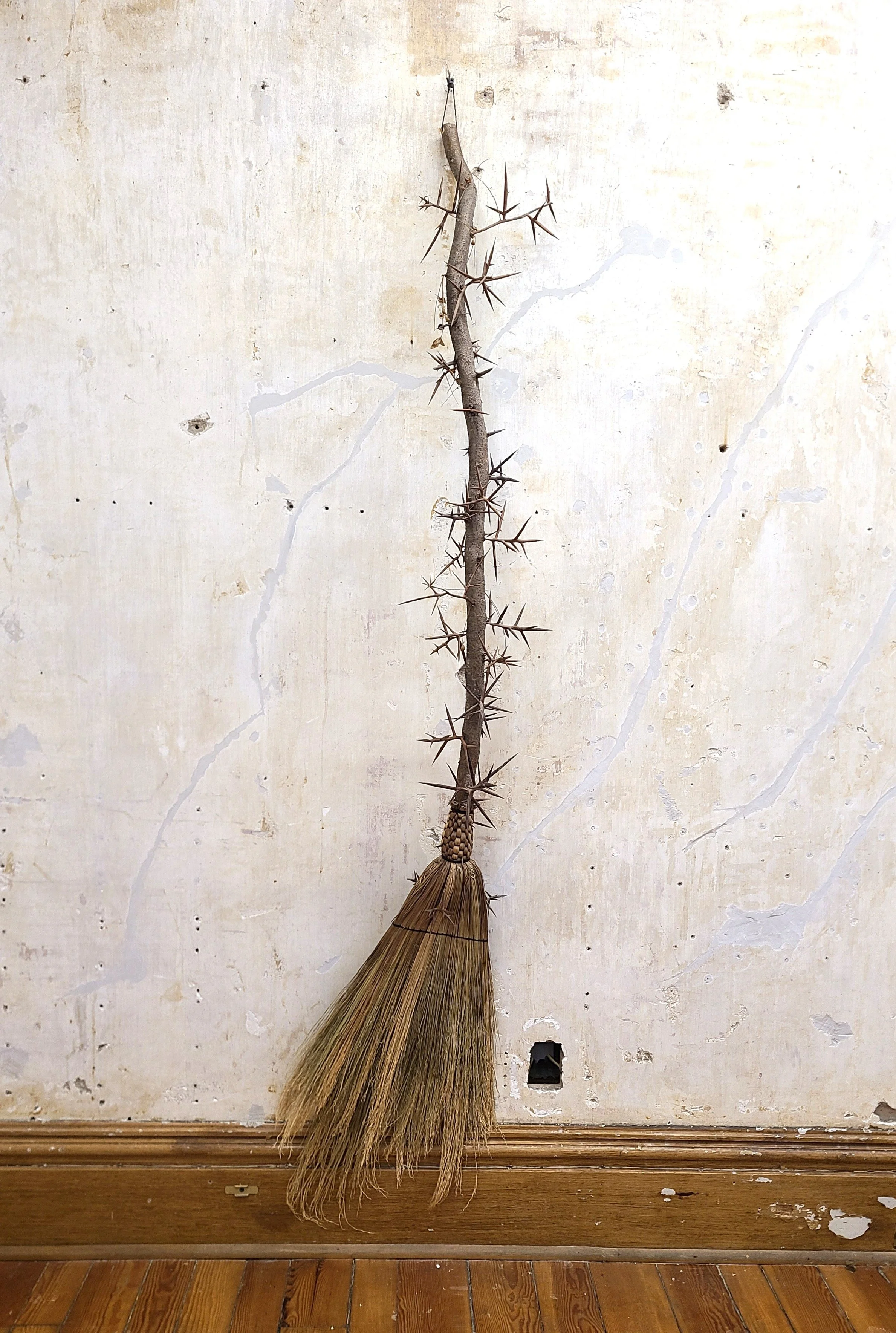
Untitled
Naturally dyed broomcorn, locust branch, nylon
Thorns, depending on the plant, are simply stems or leaves that have evolved to have their characteristic rigid pointed shape. They are adaptations that have allowed locust trees, hawthorns, osage orange trees and other plants to have some kind of additional protection from those that would harm them. Thorns are defensive tools. The trees set boiundaries and nothing unexpected will result from overstepping those boundaries.
A single line of stitching (an arguably controvercial move in the broommaking community) holds the broom into its traditional flat form. Only one line, though. Like many of us, it’s just barely keeping it together.
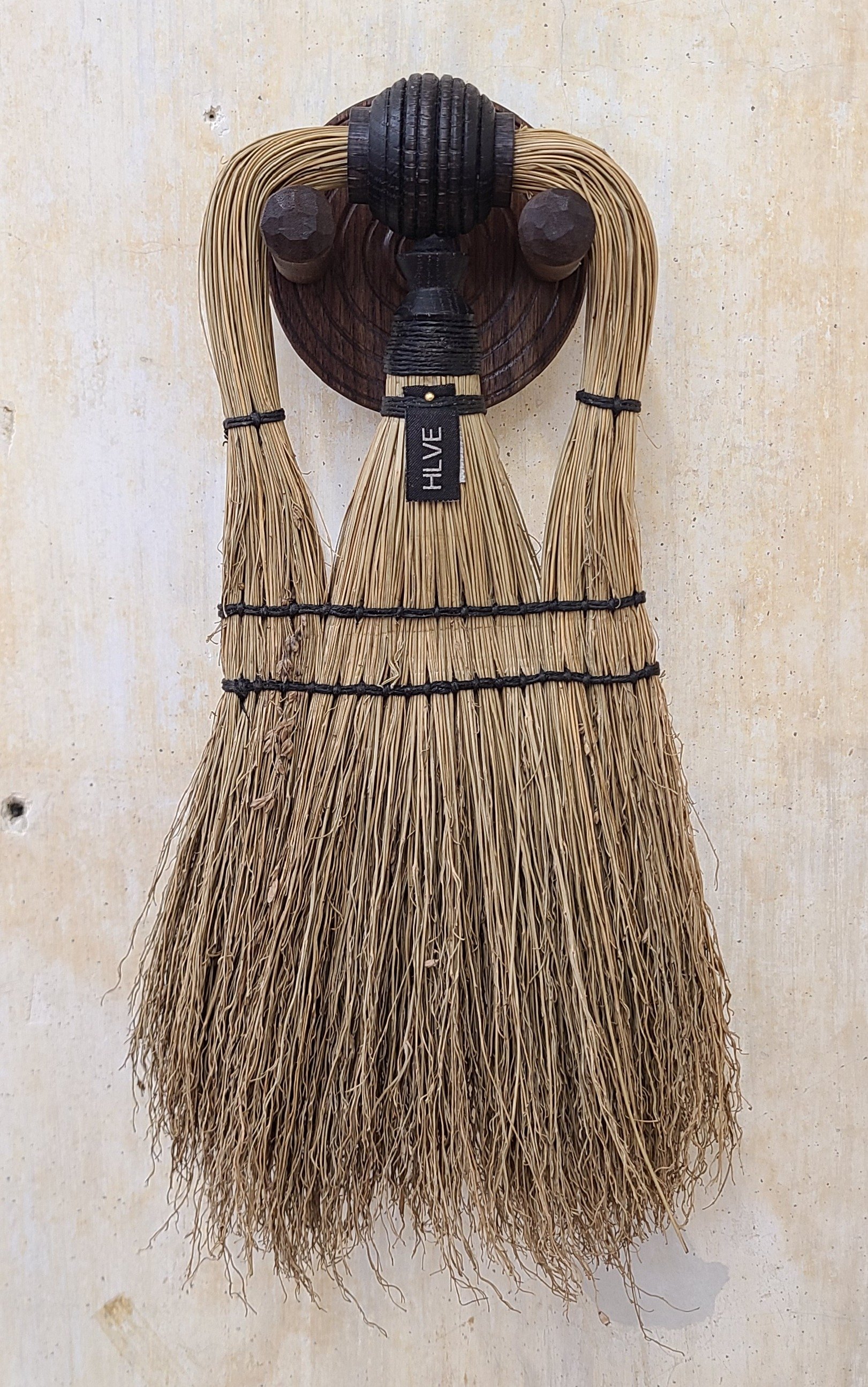
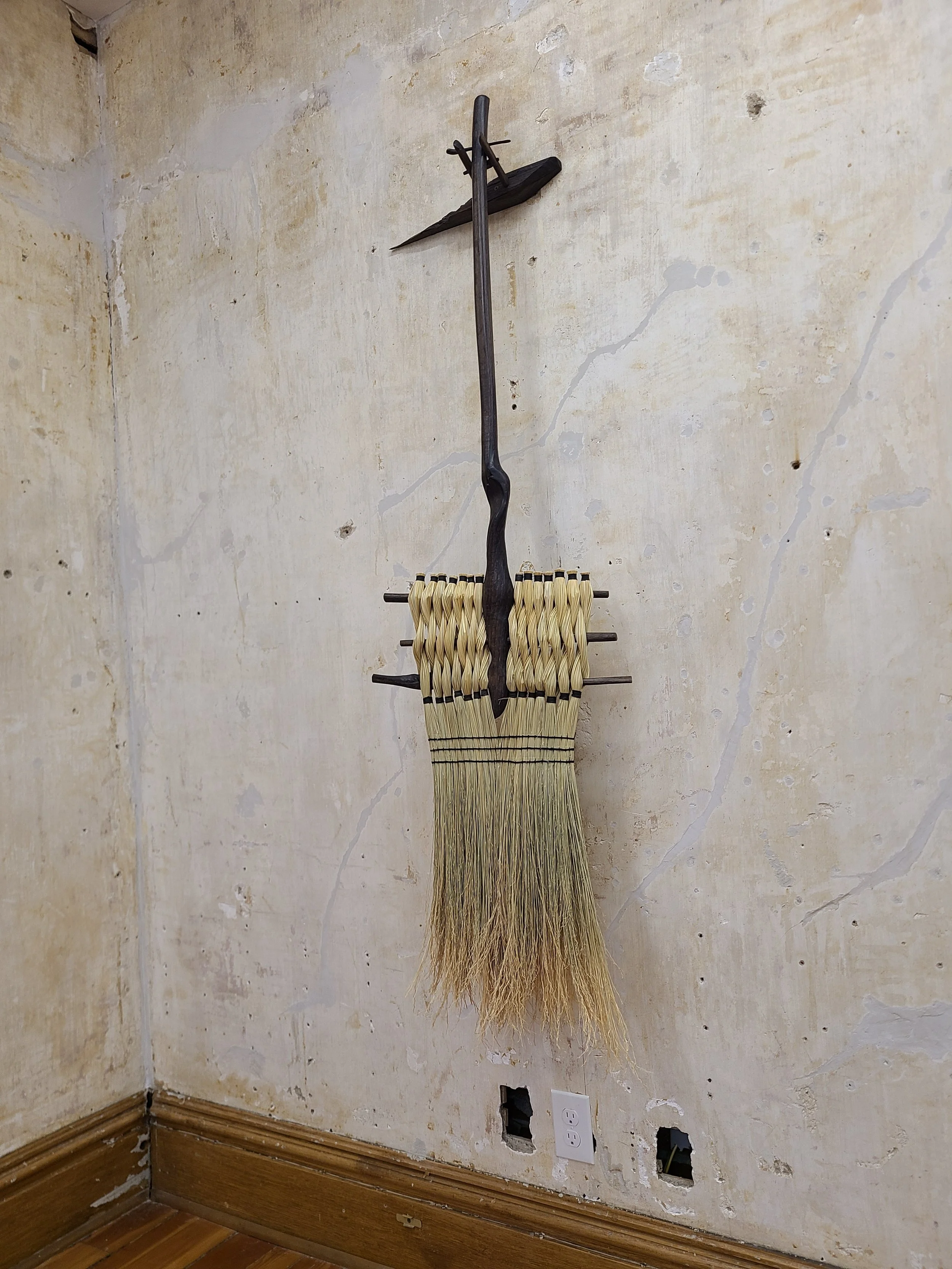
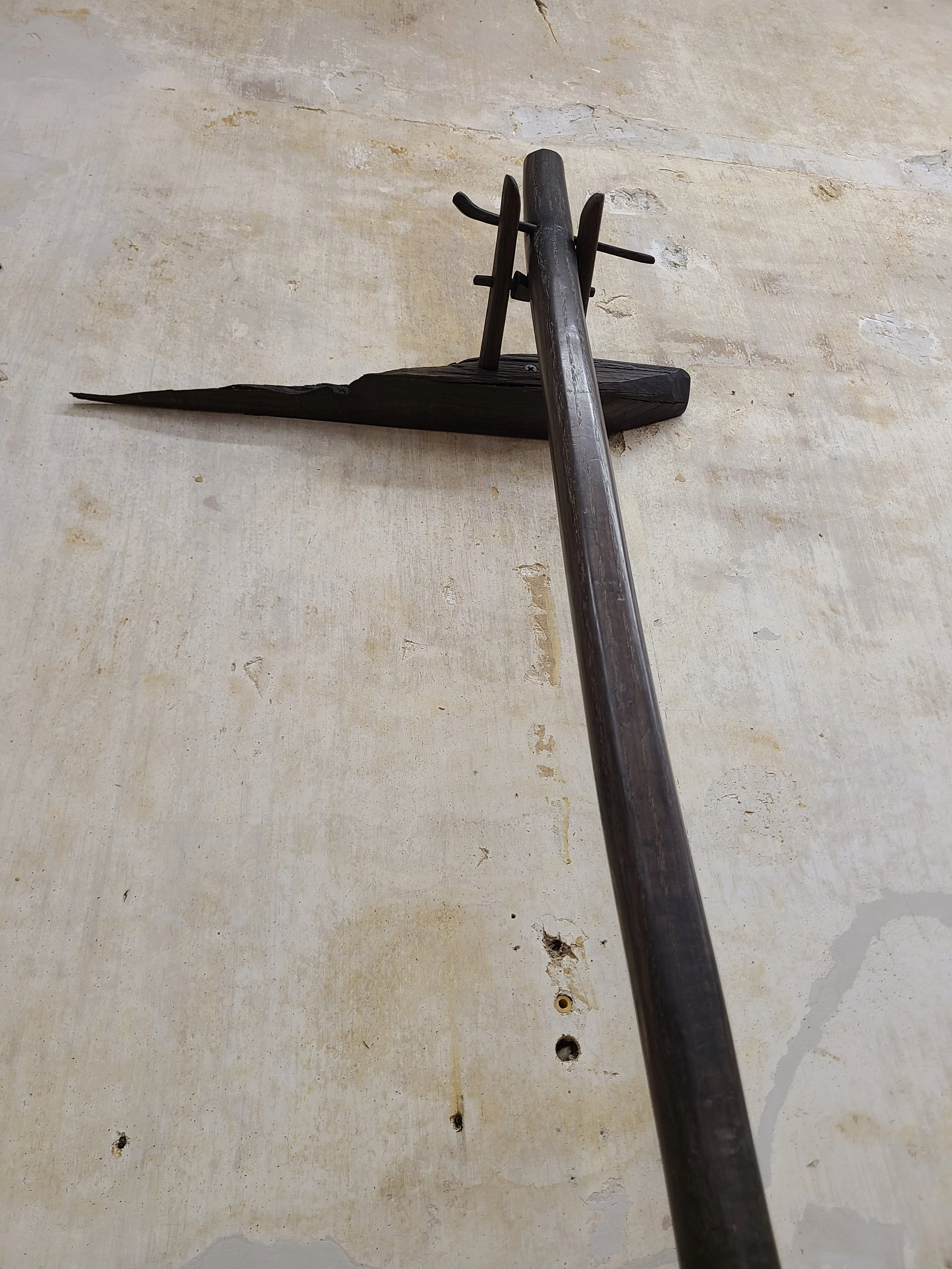
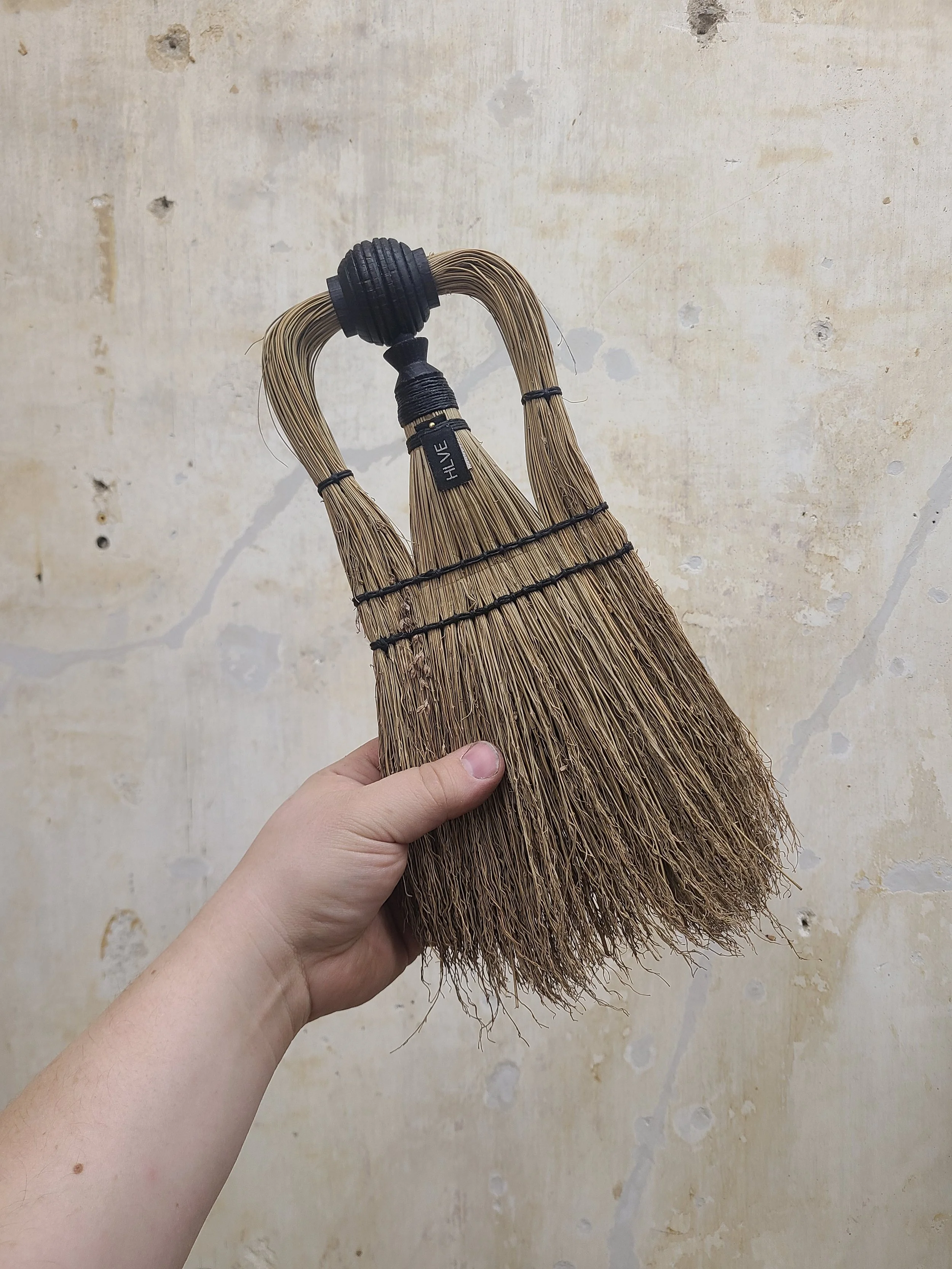
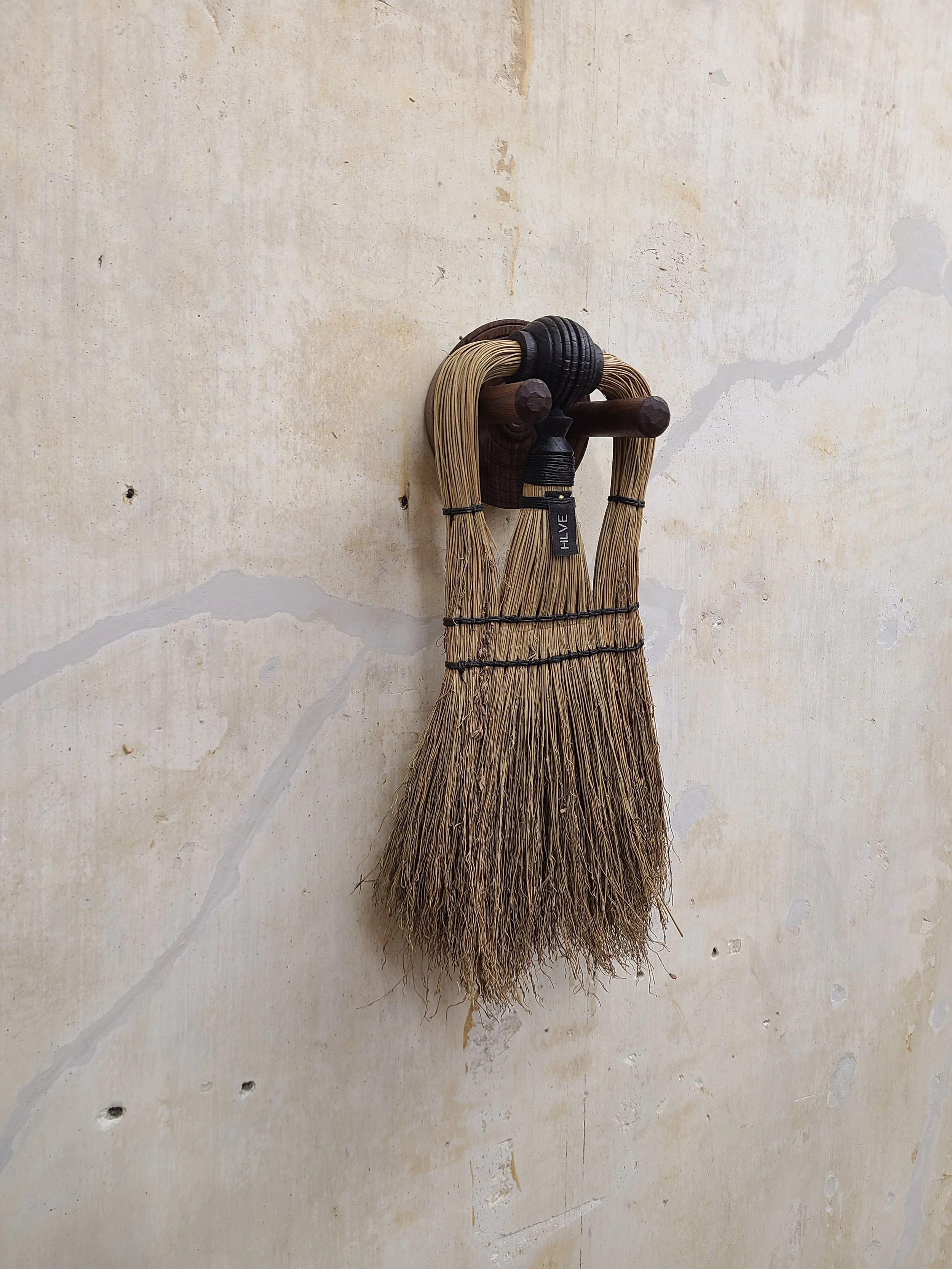
ebonized oak, walnut, waxed linen, walnut dyed broomcorn, brass pin
In a perfect world, everything I make would have its own custom hanger or bespoke storage box. In reality, this is a luxury I can only include with my most prized objects. This broom is another in a line of brooms designed to be different. It brings be great pleasure in reinventing the wheel - in making something so familiar so peculiar. If i can ever manage to make something I’ve never seen before, I know I’m on the right path. Integrating turned components has been an interest of mine for some time. I love turning. I love the process, I love the feel, and I love the ability to use even the smallest piece of what would otherwise be garbage to make something considered, beautiful, and in this case, ergonomic.
woven oak
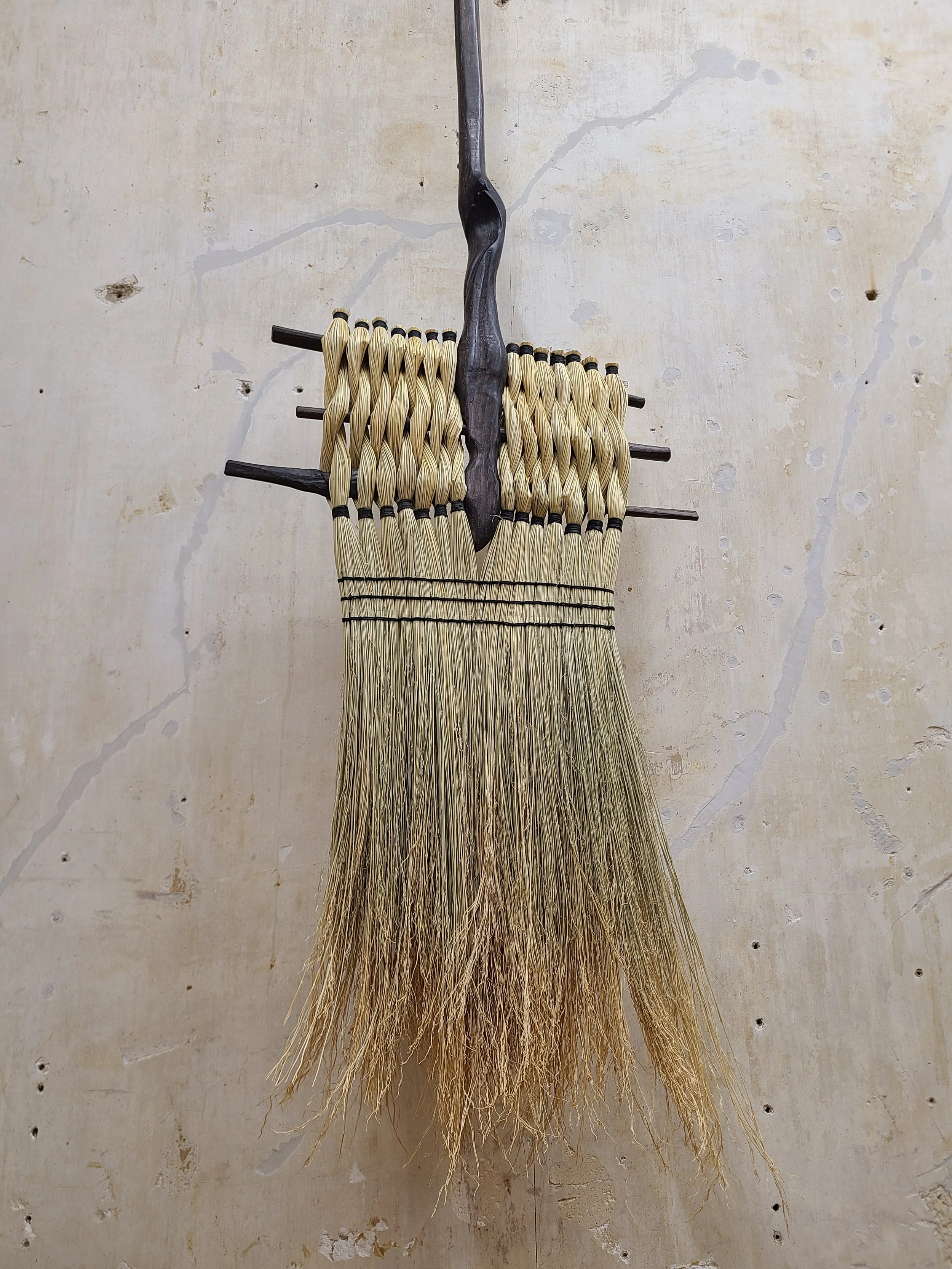
ebonized red oak, broomcorn, waxed linen
WHile turning wood allows one to easily shape wood however one desires, splitting wood allows the grain to separate and can reveal incredible characteristics and growth patterns that are harder to see. the handle as well as the supports for this woven broom were all split from a larger board, resulting in unique organic lines. working with wood in this way allows the maker to work in conversation with the material rather than simply imposing a design onto it. the tree that yielded this material is as much a collaborator as a provider. As a maker, it is my responsibility to make the sacrifice of the tree worthwhile.
The process of building the actual broomhead was inspired by rope-making and cordage. by alternating twisting techniques, I was able to play with making a symmetrical broom on a clearly asymmetrical handle. bY BUILDING THE BROOM LIKE THIS, IT maDe the handle as integral in the design of the broom as my physical manipulation of the material WOULD HAVE.